
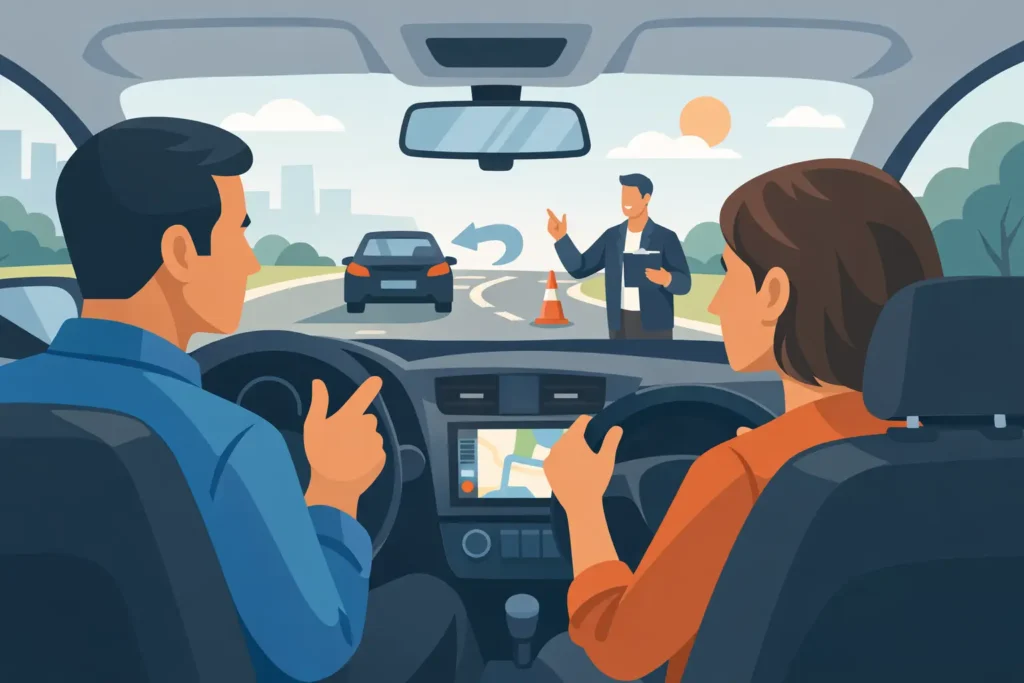
Getting back behind the wheel as an adult can feel strangely hard. You may have a license but not much recent practice. You may have moved to California, gone years without driving, or had one bad experience that made every lane change feel stressful. That is exactly where adult refresher driving lessons can make a real difference – not by starting from zero, but by helping you feel steady, capable, and safe again.
For many adults, the challenge is not learning what a stop sign means. It is rebuilding trust in your own judgment. Traffic moves fast in San Jose, Fremont, Sunnyvale, and across the South Bay. Merging, unprotected left turns, busy parking lots, school zones, and freeway speed changes can all feel like a lot when you are out of practice. A good refresher lesson meets you at your current level and helps you improve one skill at a time.
Who adult refresher driving lessons are for
These lessons are not only for people who failed a driving test. They are often the right fit for adults who have not driven in years, drivers who recently moved and need to adjust to California roads, and licensed adults who avoid freeways, downtown traffic, or night driving because they do not feel confident.
They also help people who picked up habits that are holding them back. Maybe you brake too late, hesitate too long at intersections, or feel unsure when scanning for pedestrians and cyclists. Sometimes a calm instructor can spot the issue in ten minutes and explain it in a way that finally clicks.
There is also a practical side to refresher training. Some adults need focused support before a DMV drive test. Others want help after a collision, after surgery, or after a long period of relying on family members or rideshare. The reason matters less than the goal – feeling safe, prepared, and independent again.
What happens in adult refresher driving lessons
A refresher lesson should feel structured, not overwhelming. The first part usually involves understanding your history and your goals. If you are nervous about freeway merging but fine on neighborhood streets, that should shape the lesson. If parking is your biggest stress point, that deserves attention. Adults learn best when instruction is relevant and specific.
The driving itself should be practical. That means real roads, real traffic decisions, and real coaching that helps you improve in the moment. A strong lesson often covers observation habits, speed control, lane positioning, turns, parking, right-of-way judgment, and hazard awareness. If test prep is part of the goal, the lesson should also include DMV-style maneuvers and the kinds of mistakes that commonly cost points.
Just as important, the instruction should be patient and clear. Adult drivers do not need lectures. They need someone who can explain what is happening, why it matters, and what to do differently on the next attempt. That kind of coaching builds confidence faster than vague advice ever will.
Why adults benefit from professional coaching
A spouse, parent, or friend may mean well, but that does not always make them the best teacher. Personal relationships can add pressure, and informal advice is often inconsistent. One person says you are too cautious. Another says you are too fast. That back-and-forth can make driving feel even more stressful.
Professional instruction gives you something more useful – objective feedback. An experienced instructor knows how to correct habits without making you feel judged. They also know how to adjust the pace. Some adults need a slow reentry, beginning on quiet streets before moving into heavier traffic. Others are comfortable enough in basic driving and just need targeted work on freeway driving, parking, or test routes.
There is a safety factor too. Training vehicles with dual brake controls add peace of mind, especially for nervous drivers. Knowing your instructor can step in if needed makes it easier to focus on learning instead of worrying about every possible mistake.
Common skills adults want to rebuild
Most adult refresher students are not looking for theory alone. They want help with the moments that make them tense. Intersections are a big one, especially left turns with oncoming traffic. Parking is another, whether that means backing into a space, parallel parking, or simply judging distance better.
Freeway driving is often the most emotional hurdle. Merging at speed, changing lanes in heavier traffic, and keeping a safe following distance can feel intimidating after a long break from driving. The right instruction breaks this down into steps, so you are not trying to solve everything at once.
Adults also commonly need support with scanning habits. This includes checking mirrors at the right times, looking far enough ahead, recognizing potential hazards early, and staying aware of cyclists, pedestrians, and sudden stops. These are small habits with a big impact, and they are exactly the kind of things refresher lessons are meant to strengthen.
Adult refresher driving lessons and test preparation
Not every adult student is preparing for a DMV test, but many are. In those cases, a refresher lesson should focus on both confidence and scoring. The DMV is not looking for perfection. It is looking for safe, consistent decisions. That means full stops, smooth steering, proper mirror checks, controlled speed, and clear awareness of what is happening around you.
Test-focused practice works best when it stays realistic. Cramming too many corrections into one session can leave you second-guessing yourself. A better approach is to identify the habits most likely to affect your score, then repeat them until they feel natural. Adults usually improve faster when they understand the reason behind a correction instead of just being told to memorize a rule.
If you are feeling anxious about the test, that is normal. The good news is that nerves tend to drop when the process becomes familiar. Practice in similar road conditions, calm coaching, and straightforward feedback can make the exam feel much more manageable.
How to choose the right driving school
Not every school is equally well suited for adult learners. Some programs are built mostly around teen instruction and do not adapt well to adults who need confidence rebuilding rather than first-time basics. It helps to look for a school that clearly offers adult refresher driving lessons and treats that service as more than an add-on.
Pay attention to how the school talks about instruction. You want patience, practical coaching, flexible scheduling, and a clear understanding that adults may come in with anxiety, gaps in experience, or very specific goals. Affordability matters too, but the cheapest lesson is not the best value if the instruction feels rushed or generic.
Local knowledge also counts. In busy areas like San Jose and nearby communities, road patterns, traffic behavior, and DMV expectations can vary by location. A local instructor who understands the area can help you practice in the kinds of conditions you are most likely to face on your own.
Forward Driving School serves adult learners across the South Bay with that practical, confidence-first approach. For many returning drivers, having flexible scheduling, supportive instruction, and real-world local practice makes the step back into driving feel much more manageable.
What progress usually looks like
Confidence rarely returns all at once. Most adults notice progress in stages. First, the car feels less intimidating. Then common tasks like turns, lane changes, and parking start to feel more automatic. After that, attention shifts away from fear and back to decision-making.
This is why one lesson can help, but a short series often works better. It gives you time to practice, absorb feedback, and return with better control. The exact number depends on your starting point. Someone who just needs a freeway brush-up may improve quickly. Someone returning after many years away may need a steadier pace.
What matters is not comparing yourself to anyone else. Adult drivers come in with different histories, different stress levels, and different goals. Good instruction respects that and builds from where you are.
A smart next step for nervous or returning drivers
If driving has become something you avoid, that avoidance usually gets stronger with time. A refresher lesson can interrupt that pattern in a practical, low-pressure way. You do not need to wait until confidence magically appears first. In most cases, confidence comes after a few guided wins on the road.
That could mean making clean turns in traffic, merging onto the freeway without panic, or parking without needing three extra attempts. Small improvements add up quickly when the teaching is calm and focused.
If you have been telling yourself, I know I should get comfortable driving again, you are probably right. A good lesson does not expect you to be fearless. It just helps you get better, safer, and more comfortable one drive at a time.
