
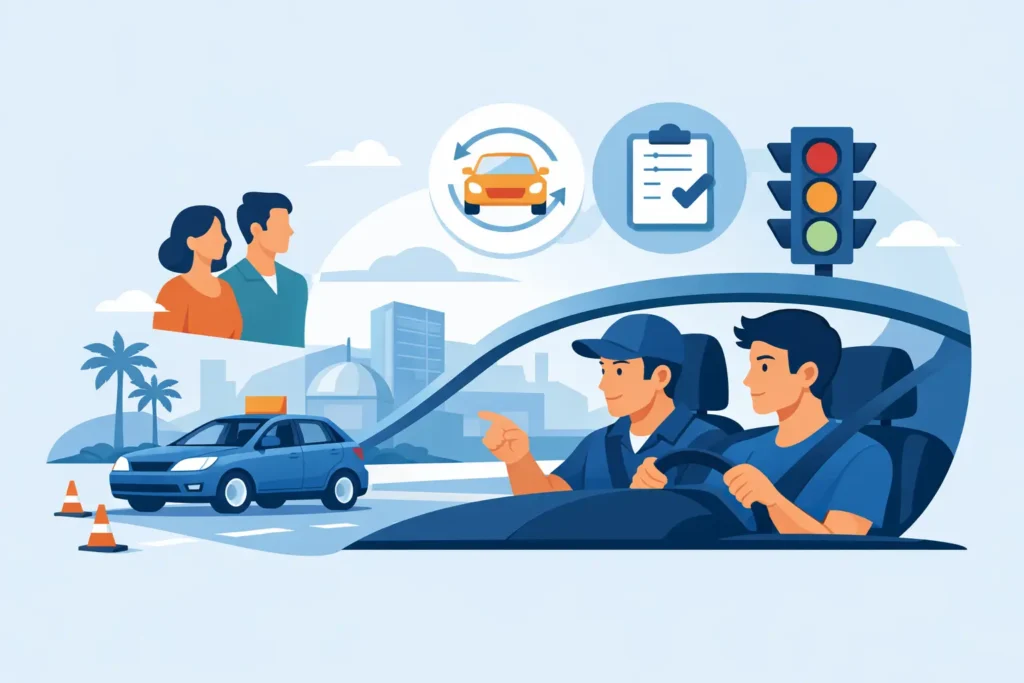
A teen’s first lesson usually starts the same way – one hand gripping the door, a parent asking one last question, and a new driver trying to look calmer than they feel. That is exactly why teen driving lessons San Jose families choose should be about more than checking a box for the DMV. The right lessons help teens stay steady in traffic, make smart decisions under pressure, and build habits that last long after the test.
In San Jose, learning to drive is not a simple parking lot exercise. New drivers have to deal with busy intersections, lane changes on fast roads, school zones, cyclists, freeway on-ramps, and the stop-and-go rhythm that comes with Bay Area traffic. A teen who only learns the basics may technically know how to steer and brake, but that is not the same as being ready to drive safely on their own.
What good teen driving lessons in San Jose should actually teach
A strong lesson program does two jobs at once. It teaches the mechanics of driving, and it teaches judgment. Teens need both.
The mechanical side is straightforward. They need to learn smooth braking, steering control, mirror checks, turns, backing, parking, lane positioning, and speed management. But if a lesson stops there, it misses the bigger issue. Most first-time drivers are not nervous because they cannot turn the wheel. They are nervous because the road changes quickly and they are afraid of making the wrong choice.
That is where guided instruction matters. A patient instructor helps teens read traffic, anticipate other drivers, and understand why a decision is safe or unsafe. In real life, driving is full of moments that are not perfectly scripted. A car may cut across two lanes. A pedestrian may step into the crosswalk late. A green light may not stay green. Practical coaching helps teens stay calm and respond correctly.
Why San Jose roads require more than basic practice
Every city teaches its own version of defensive driving, and San Jose gives new drivers a lot to process. Roads can shift from quiet residential streets to busy multilane corridors in a matter of minutes. Teens may practice near shopping centers, school traffic, neighborhood stop signs, and faster streets where timing and awareness matter more.
That local experience makes a difference. A student who learns only from a family member may get plenty of driving time, but not always structured progress. Sometimes parents understandably focus on the outcome – do not hit the curb, do not forget the signal, slow down – while an experienced instructor can break each skill into manageable steps.
There is also a balance to strike. Some teens need gentle encouragement. Others need clear correction right away. Good instructors know how to adjust. The goal is not to make a teen feel comfortable at all costs. The goal is to build comfort through competence.
What parents should look for in teen driving lessons San Jose offers
Parents are usually looking for the same thing their teens are, even if they say it differently. Teens want less stress. Parents want safety and visible progress.
A good program should feel organized from the start. Scheduling should be simple. Expectations should be clear. Lessons should have a purpose instead of repeating the same route without building new skills. It also helps when the school uses professionally equipped training vehicles with dual controls, because that extra layer of safety allows students to learn without feeling like one mistake will spiral.
Affordability matters too, but price should be viewed in context. The cheapest lesson is not a bargain if the student finishes still unsure about lane changes, left turns, or parking. On the other hand, the most expensive option is not automatically the best. What families usually need is value – practical instruction, flexible scheduling, patient teaching, and enough structure to help a teen improve from lesson to lesson.
A satisfaction promise can matter here as well. For nervous families, knowing the first lesson is designed to earn trust can remove some of the pressure around getting started.
The difference between practice and professional instruction
Parents play an important role in helping teens log hours and reinforce habits, but professional lessons fill a different need. They give teens neutral, focused coaching without the emotional tension that can show up in family practice sessions.
That matters more than some people expect. Teens often worry about disappointing their parents. Parents worry about safety, timing, and whether they are teaching the right thing. Inside the car, that can create a lot of pressure. A trained instructor brings a calmer environment and a more objective approach.
Professional instruction also tends to move faster in the right way. Not rushed, but structured. One lesson might focus on intersections and right-of-way. The next might work on lane changes, traffic flow, and turns. Another might prepare specifically for the behind-the-wheel test. Each session builds on the last.
How confidence really gets built
Confidence is not telling a teen they are doing great when they are not ready. Real confidence comes from repetition, correction, and small wins that add up.
At first, many teens need help with the basics of scanning mirrors, checking blind spots, and maintaining a steady speed. Then they begin to connect those actions into routines. Eventually, they stop thinking of them as separate tasks and start driving with better rhythm and awareness.
That process cannot be forced, and it does not look identical for every student. Some teens are hesitant but careful. Others are comfortable too early and need help slowing down mentally. The best lessons account for both. They do not just praise. They coach.
This is one reason many families prefer a local school with a supportive style. A patient instructor can push a student forward without overwhelming them. For students who feel anxious, that balance is often the difference between dreading lessons and actually improving.
Getting ready for the DMV test without teaching to the test only
Most teens and parents want the same result – pass the behind-the-wheel test as soon as the student is truly ready. That is a reasonable goal, but it should not narrow the focus too much.
Test prep matters. Students should know what examiners watch for, including observation habits, speed control, turns, stops, lane position, and overall confidence. Practicing common test-day mistakes can absolutely help. So can learning how to stay calm when being evaluated.
Still, a teen who is trained only for the route or only for a checklist may struggle once the license is in hand. The better approach is DMV-aligned instruction that also prepares students for real traffic, everyday errands, and the unexpected moments that happen outside a test setting.
That is where practical schools stand out. They help students pass, but they also teach the kind of road-readiness parents actually care about.
Convenience matters for busy families
For many San Jose families, the biggest challenge is not deciding whether lessons are necessary. It is fitting them into a packed schedule. School, sports, work, and family routines can make driver training feel harder to coordinate than it should be.
That is why flexible booking, multiple payment options, and free pick-up and drop-off can make a real difference. They reduce friction and make it easier to stay consistent. Consistency matters because long gaps between lessons can slow progress, especially for beginners who are still building muscle memory and confidence.
A school like Forward Driving School appeals to local families for that reason. The instruction is practical and supportive, but the service side matters too. When the process is easier to manage, students are more likely to stay on track and build momentum.
When is a teen ready to start lessons?
The short answer is usually earlier than families think, but only when the student is legally eligible and open to learning. Teens do not need to arrive confident. They just need to be willing.
In fact, some of the most successful students begin with very little confidence at all. What helps is starting with a clear plan, realistic expectations, and lessons that meet them where they are. Waiting for a teen to magically feel ready can delay progress. Guided practice is often what creates that readiness.
Parents can help by keeping the message simple. The first lesson is not a final exam. It is a starting point.
Learning to drive in San Jose can feel like a big step, because it is one. But with patient instruction, local road experience, and a focus on real safety instead of just test-day nerves, that first step gets a lot more manageable. The right lesson should leave a teen feeling a little more capable than when they got in the car, and that is how safe drivers are made.
