
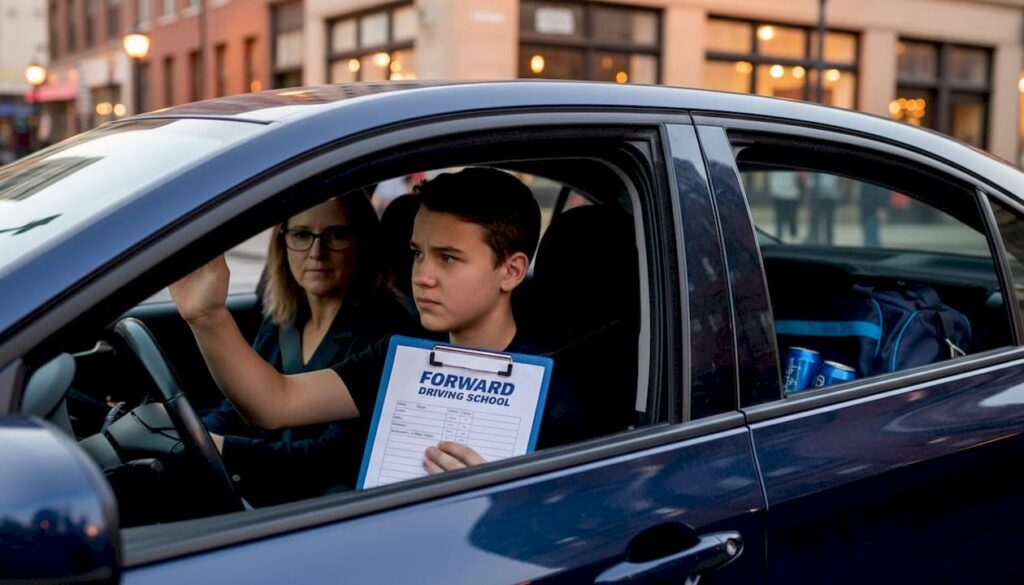
Getting your learner’s permit feels like a milestone, and it is. But many first-time drivers in San Jose make the same mistake: assuming the permit itself means they are ready to drive safely. What is on-road driving practice, really? It is a structured, supervised process where you build the reflexes, judgment, and road awareness that no written test can give you. California has specific legal requirements around this practice, and understanding them early keeps you on track for your license and, more importantly, keeps you safe on actual roads.
Table of Contents
- Understanding the legal requirements for on-road driving practice in California
- Core skills and maneuvers to master during your on-road practice
- How on-road practice builds the defensive driving habits that save lives
- Practical tips for logging hours, scheduling lessons, and preparing for your San Jose driving test
- What to expect on your behind-the-wheel driving test in California
- Reconsidering how on-road practice prepares you beyond the test
- How Forward Driving School supports your on-road driving practice in San Jose
- Frequently asked questions
Key Takeaways
| Point | Details |
|---|---|
| California practice rules | You must complete 50 hours of supervised driving with a licensed adult 25 or older, including 10 hours at night, before testing. |
| Core maneuvers to learn | Practice lane centering, mirror checks every 8-10 seconds, safe following distances, parking, and freeway skills. |
| Build automatic habits | Regular practice creates unconscious safety habits like scanning ahead and maintaining space, reducing crash risk. |
| Prepare with logs and lessons | Keep a parent-signed practice log, schedule professional lessons, and focus on San Jose’s traffic challenges. |
| Test day essentials | Bring your permit, practice log, driver education proof, and valid insured car for the DMV behind-the-wheel test. |
Understanding the legal requirements for on-road driving practice in California
Before you ever schedule your behind-the-wheel test, California expects you to put in real time behind the wheel under close supervision. This is not optional paperwork. It is a legal framework designed to ensure new drivers are genuinely ready for independent driving.
Here is what the California DMV requires for teens between the ages of 15.5 and 18:
- 50 total hours of supervised driving practice, including at least 10 hours at night
- Your supervising adult must be 25 years or older and hold a valid California driver’s license
- The supervisor must sit close enough to physically take control of the vehicle if needed
- You must hold your permit for a minimum of 6 months before scheduling your driving test
- You must complete 6 hours of professional driving instruction with a licensed instructor
- No cell phone use, even hands-free, is allowed while driving under permit restrictions
These rules exist because new drivers genuinely need time to build real skill, not just familiarity. A teen driver transition overview makes clear that moving from permit holder to licensed driver is a process, not a single event.
Pro Tip: Do not wait until month five to start logging night hours. Many San Jose teens discover too late that getting 10 quality night driving sessions takes longer than expected. Start within your first few weeks of having your permit.

Reviewing California DMV test recommendations early helps you structure your 50 hours intentionally rather than just driving aimlessly around the neighborhood.
Now that you know the legal baseline, let’s dive into what practicing on the road really involves.
Core skills and maneuvers to master during your on-road practice
On-road driving practice is not just time in the car. It is deliberate work on specific skills that the DMV will evaluate and that real traffic demands every single day.
The California DMV handbook outlines the core maneuvers you must be comfortable with, including lane centering, mirror checks, controlled turns, safe following distance, parking, and freeway entry and exit. For San Jose drivers specifically, that means getting comfortable with Highway 101 merges and navigating busy downtown intersections.
Here are the essential skills to build into your practice sessions:
- Mirror checks every 8 to 10 seconds to maintain constant situational awareness
- Safe following distance of 3 to 4 seconds under normal conditions, adjusted for speed and traffic density
- Lane centering practiced through straight roads, curves, and lane changes
- Controlled turns at stop signs, traffic lights, and uncontrolled intersections
- Parallel parking and three-point turns, two skills that trip up many test-takers
- Freeway entry and exit including proper speed matching before merging
Use the San Jose driving lesson checklist to make sure you are covering every skill area, not just the ones that feel comfortable.
Pro Tip: Most new drivers practice parking on quiet streets and never on an actual uphill or tight urban block. San Jose has both. Ask your supervisor or instructor to include at least one session in a real parking scenario near downtown.
The benefits of behind-the-wheel lessons go well beyond test preparation. Professional instruction introduces you to driving maneuvers in a controlled way that builds genuine competence faster than unsupervised repetition alone.
With these crucial skills in mind, let’s explore how practice builds safe driving habits and automatic responses.
How on-road practice builds the defensive driving habits that save lives
Here is the part most guides skip: on-road driving practice is not just about learning where the gas pedal is. It is about making safety automatic.
“The goal of on-road practice is not to memorize rules. It is to build responses so practiced they happen before you have time to think.”
When you first start driving, checking mirrors, maintaining distance, and steering all require conscious effort. That cognitive load is dangerous in real traffic. Automaticity in mirror checks and following distance habits, built through repetitive on-road practice, free up mental space to actually process what is happening around you.
Key defensive habits to develop through consistent practice:
- Scan 12 to 15 seconds ahead to anticipate hazards before they become emergencies. This is the single most underrated skill in new driver training.
- Expand your following distance to 4 seconds or more in rain, fog, or heavy traffic. The standard 3 seconds assumes dry roads and alert drivers.
- Check mirrors before every lane change, turn, and stop. It sounds basic, but NHTSA data shows that drivers under 20 have the highest distraction-related crash rates of any age group.
- Stay off your phone entirely. California law is clear, and the cell phone restrictions for permit holders under 18 are strict.
Pro Tip: During practice sessions, ask your supervising adult to call out hazards they see before you react to them. Over time, you should start spotting them first. That shift, from reactive to anticipatory, is exactly what makes a driver genuinely safe.
Understanding this learning process clarifies why consistent, documented practice is essential before your test.
Practical tips for logging hours, scheduling lessons, and preparing for your San Jose driving test
Good intentions do not pass the DMV test. Organization does. Here is how to make your 50 hours count.
Step-by-step approach to logging and scheduling:
- Create a practice log from day one. Record the date, start and end time, location, supervisor name, and a note on what you practiced.
- Schedule your 6 professional instruction hours early so your instructor can identify weak spots with plenty of time to fix them.
- Prioritize night driving in your first month, not your last week.
- Build in dedicated sessions for parking and freeway driving, two skills San Jose families most often neglect until it is too late.
- Book your DMV appointment at least 3 to 4 weeks in advance. San Jose test slots fill up fast.
Documents to bring to every lesson and to your test:
- Valid California learner’s permit
- Signed 50-hour practice log
- Proof of completed driver education
- Vehicle registration and proof of insurance
California permit rules are specific: your supervisor must always be positioned to take control, and many teens miss the 10-night-hour requirement because they did not track it carefully from the start.
| Practice area | Minimum recommended sessions | Common mistake |
|---|---|---|
| Residential streets | 5 to 8 sessions | Starting and stopping too abruptly |
| Highway and freeway | 4 to 6 sessions | Merging too slowly or too fast |
| Parking (parallel, lot) | 4 to 5 sessions | Not checking blind spots |
| Night driving | 10 or more hours required | Starting too late in the permit period |
| Downtown intersections | 3 to 4 sessions | Misjudging pedestrian timing |
Pro Tip: Take your trusted teen driving lessons before your last two weeks of preparation, not as a last-minute fix. Instructors are most useful when there is still time to build on their feedback.
What to expect on your behind-the-wheel driving test in California
The behind-the-wheel test lasts approximately 15 to 20 minutes and evaluates more than 20 maneuvers. The examiner will sit in the passenger seat and direct you through a route that includes real traffic conditions.
What the examiner is watching:
- Safe, consistent mirror checks before every maneuver
- Proper lane positioning and smooth steering
- Correct speed management through school zones, residential streets, and freeways
- Parallel parking execution and three-point turns
- Response to traffic signals, stop signs, and pedestrians
Common reasons teens fail:
- Rolling stops at stop signs
- Incomplete mirror or shoulder checks during lane changes
- Hesitation at freeway on-ramps
- Parking errors, especially parallel parking
| Test element | What passes | What fails |
|---|---|---|
| Stop signs | Full stop behind the line | Rolling or early stop |
| Lane changes | Signal, check, smooth move | No mirror check, jerky movement |
| Freeway merge | Speed matched before entry | Slow entry into fast traffic |
| Parking | Accurate, controlled | Hitting curb or crooked finish |
Before your test day, review DMV test recommendations so you know exactly which maneuvers carry the most weight and where most candidates lose points.
Reconsidering how on-road practice prepares you beyond the test
Here is an uncomfortable truth most driving guides will not tell you: logging 50 hours does not automatically make you a safe driver. Hours without intention are just time.
We see this pattern regularly in San Jose. A teenager completes the required hours, passes the test, and then freezes the first time they merge onto Highway 101 alone. Why? Because their 50 hours were spent on familiar streets with a relaxed supervisor who rarely challenged them.
Night driving illustrates this perfectly. Visibility drops reaction time by up to 50% after dark, yet many families check the night hours box as quickly as possible rather than treating those sessions as serious skill-building time.
The parents who are most effective as supervisors are not the ones who let their teen drive to school every morning. They are the ones who deliberately take their teen to an unfamiliar intersection, a crowded parking garage, or a rainy-night freeway on-ramp. That kind of targeted discomfort builds the judgment that keeps new drivers safe for life, not just for the test.
Parental involvement matters far more than most families realize. It is not a formality. It is the difference between a driver who is technically licensed and one who is genuinely prepared. Teen driving lessons work best when parents understand this too, because professional instruction and supervised home practice reinforce each other.
How Forward Driving School supports your on-road driving practice in San Jose
On-road practice does not have to feel overwhelming. Forward Driving School has been helping San Jose teens and first-time adult drivers build real road confidence since 2010, and our drivers ed programs are built specifically around the challenges you will face in this city.
Our behind-the-wheel lessons focus on the skills that actually matter: Highway 101 merges, downtown intersections, parallel parking on tight blocks, and night driving. Our instructors help you fulfill all 6 required professional practice hours while building the defensive habits that carry well beyond your test day. We offer free pick-up and drop-off, flexible scheduling around school, and vehicles equipped with dual brake pedals for safety. Whether you are just starting your teen driving lessons in San Jose or looking for a step-by-step driving path to get test-ready faster, we are here to guide you every mile of the way.
Frequently asked questions
What counts as supervised driving practice for California teens?
Supervised practice requires driving with a licensed adult 25 or older seated close enough to take control, logging 50 total hours including 10 at night, across varied road conditions.
How important is night driving practice before the DMV test?
It is more important than most teens expect. Reduced visibility at night can increase reaction time by 50%, and California mandates at least 10 of your 50 supervised hours be completed in the dark.
What should I bring to my behind-the-wheel driving test?
Bring your learner’s permit, signed 50-hour practice log, proof of completed driver education, and a vehicle with valid registration and insurance. The California DMV lists all required documents on their teen driver page.
Can I use my phone while practicing driving with a permit?
No. California law prohibits all cell phone use, including hands-free, for drivers under 18 operating under permit restrictions.
How can professional driving lessons help with my on-road practice?
Professional lessons give you expert feedback on the hardest maneuvers, like freeway merges and parallel parking, while fulfilling your required 6 hours of instruction and building the test-day confidence that supervised home practice alone rarely delivers.