
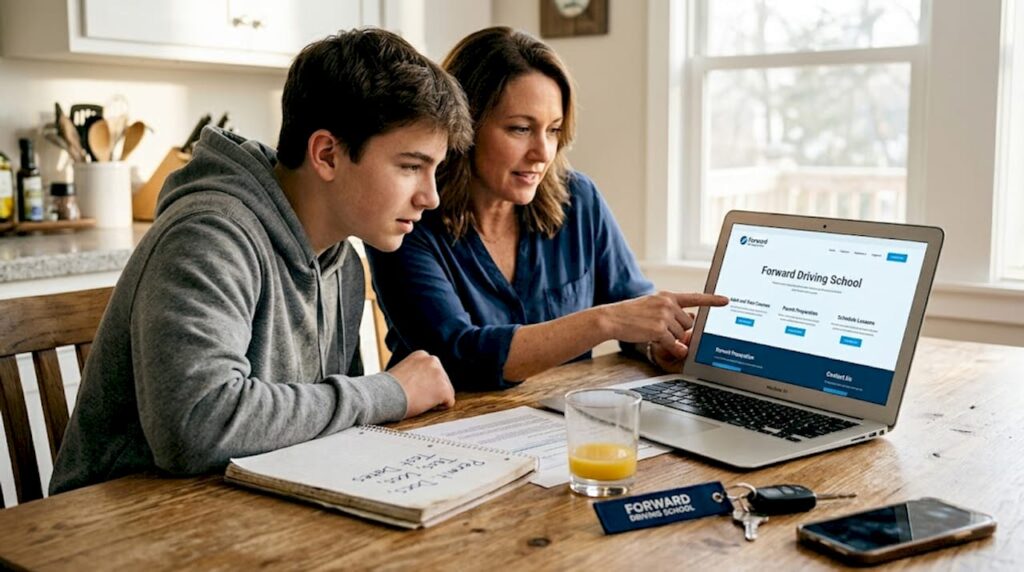
Getting your first driving lesson on the calendar sounds simple until you realize there are permits to verify, school policies to review, cancellation fees to avoid, and test wait times that can stretch far longer than anyone expects. Knowing how to schedule driving lessons the right way means more than just picking a date. It means setting up a sequence that moves you from learner’s permit to license without wasted time, surprise fees, or missed opportunities. This guide walks you through every step, from preparation to booking to managing changes, so you can get behind the wheel with confidence.
Table of Contents
- Key takeaways
- How to schedule driving lessons: what to do first
- Step-by-step guide to booking driving lessons
- Managing schedule changes and cancellations
- Timing lessons around your driving test
- Common mistakes when scheduling driving lessons
- My honest take on scheduling driving lessons
- Start your lessons the right way with Forwardschool
- FAQ
Key takeaways
| Point | Details |
|---|---|
| Prepare before you book | Confirm your learner’s permit and state requirements before scheduling any behind-the-wheel lessons. |
| Review school policies in writing | Get cancellation, refund, and change policies in writing to avoid unexpected fees. |
| Book lessons early | Schedule your first lesson as soon as your permit is valid to build experience and avoid test delays. |
| Manage changes carefully | Most schools and test centers limit how many times you can reschedule before penalties apply. |
| Align lessons with test availability | Test wait times can be long, so time your lessons to match realistic test slot availability. |
How to schedule driving lessons: what to do first
Before you open any booking portal or call a driving school, you need a few things in order. Skipping this step is exactly how families end up paying for lessons their teen legally cannot take yet.
Start with your state’s licensing requirements. In California, for example, teens must be at least 15.5 years old and hold a valid learner’s permit before any behind-the-wheel instruction can begin. The permit is not optional. Students must complete both classroom hours and behind-the-wheel training within a set window, and age requirements are firm. Check your state’s DMV website to confirm the exact rules before you book anything.
Next, understand the types of lessons available:
- Private lessons with a certified instructor (the most common format for behind-the-wheel training)
- Group classroom sessions for the knowledge and theory portion of driver’s education
- Online scheduling options through school portals or third-party platforms
- Package deals that bundle multiple lessons at a discount
Once you know what you need, the next step is reviewing school policies before committing. Experts recommend requesting written policy statements on cancellations, refunds, and rescheduling before you put money down. Policies vary widely between schools, and what one school handles with a simple email swap, another charges a full lesson fee to change.
Pro Tip: Ask the driving school specifically: “What happens if I need to cancel within 24 hours?” The answer tells you a lot about how they operate and what you should budget for mistakes.
Gather your documents before the first call or form submission. You will typically need your learner’s permit number, a parent or guardian signature for minors, and a payment method. Having these ready cuts the booking process in half.
Step-by-step guide to booking driving lessons
With your prerequisites checked off, here is how to move through the actual booking process without confusion.

Step 1: Find reputable driving schools near you. Search for California DMV-registered schools in your area. Registration matters because it affects whether your training hours count toward your license. Forwardschool, for example, is fully registered with the California DMV and serves the San Jose area with flexible scheduling built around student availability.
Step 2: Compare lesson packages and pricing. Most schools offer individual lessons and multi-lesson packages. A quick look at lesson pricing factors will help you understand what influences cost and which package makes the most sense for your timeline.
Step 3: Choose your scheduling method. You can book through the school’s online portal, by phone, or in person. Online scheduling is increasingly common and lets you see real-time availability without playing phone tag.
Step 4: Select your lesson times. Here is where most families make a mistake. They pick whatever is open rather than thinking about the best time to take driving lessons. Morning slots on weekdays tend to have lighter traffic and are often better for nervous beginners. Late afternoon and after-school slots go fast, especially for teen learners.
Step 5: Confirm everything in writing. After booking, you should receive a confirmation by email or text. If you do not get one within an hour, follow up.
Step 6: Prepare for your first lesson. First lessons involve practical steps like adjusting your seat, checking mirrors, and confirming all doors are closed before moving. Knowing this ahead of time reduces anxiety and makes the session productive from minute one.
Here is a quick comparison of booking methods to help you decide:
| Booking method | Best for | Drawback |
|---|---|---|
| School website portal | Seeing real-time availability | May not show all options |
| Phone or in-person | Clarifying policies and questions | Dependent on office hours |
| Third-party platforms | Comparing multiple schools | Fees and unverified listings |
Pro Tip: When you schedule driving classes online, double-check that the school’s portal is affiliated directly with the school. Third-party sites sometimes list outdated availability or charge booking fees on top of lesson costs.
Managing schedule changes and cancellations
Life happens. A test comes up at school, a family event shifts the week around, and suddenly the lesson you booked two weeks ago no longer works. How you handle that change determines whether it costs you nothing or costs you real money.
Cancellation policies differ widely between private driving schools, and understanding them before you are in a bind is far better than learning them under pressure. Most schools require at least 24 to 48 hours notice for a free reschedule. Inside that window, you are typically looking at a partial or full lesson fee.
Key points to manage changes well:
- Read the full cancellation policy before your first lesson, not after.
- Track your reschedule count if the school limits changes per package.
- Contact the school as early as possible when a conflict arises, even if you are outside the cancellation window. Many instructors will work with you if you communicate proactively.
- Avoid no-shows entirely. A missed lesson with no notice is usually charged at full price and can get you bumped from preferred time slots.
- Use the school’s official contact method for changes. Texting a personal instructor number is not the same as an official change request.
For driving test bookings specifically, regulations have tightened in 2026. New rules now mandate that learners personally manage their test bookings, with a maximum of two changes allowed before cancellation and rebooking is required.
Booking test slots too early or using both of your allowed changes before you are truly ready can limit your options and create real scheduling stress. Plan changes carefully and save them for when they matter most.
Using official portals rather than third-party bots is more reliable given these 2026 restrictions, and it keeps you compliant with the new rules.
Timing lessons around your driving test
This is where smart planning separates the learners who sail through the process from those who end up stuck waiting months longer than necessary.
Test wait times reached up to 22 weeks in many areas in 2026. That is more than five months between booking and testing. If you schedule all your lessons first and then try to book a test, you could be sitting on a completed course with nothing to do but wait and potentially get rusty.
The smarter approach is to book your driving test early, around the time you start your lessons, so your test date aligns with when you will realistically be ready. Use that test date as a target and work your lesson schedule backward from it.
| Strategy | When to use it | Risk if misused |
|---|---|---|
| Book test early, align lessons | When test wait times are long | Test arrives before you are ready |
| Book test after lessons | When wait times are short | Long gap between course and test |
| Monitor cancellation slots | When you need an earlier date | Extra fees for third-party services |
Booking your first lesson as soon as you have your learner’s permit is strongly recommended. You do not need any prior experience to start. The earlier you begin, the more time you have to accumulate hours, build comfort, and hit your test date in good shape.
Third-party services that monitor test cancellations do exist and can find earlier road test slots for fees ranging from $25 to $150. They can be useful in a pinch, but they are not a substitute for planning ahead. For test prep strategies specific to California, Forwardschool has a detailed breakdown of DMV test preparation tips worth reviewing before you finalize your schedule.
Pro Tip: Set a recurring calendar reminder to check the DMV test portal every few days. Cancellations happen regularly, and an opening that saves you six weeks of waiting can appear and disappear in hours.
Common mistakes when scheduling driving lessons
Even with the best intentions, first-time learners and parents make the same avoidable errors. Here is what to watch for:
- Booking without reading policies. Never pay for a lesson package before you understand what happens if you cancel or need to reschedule.
- Skipping the confirmation. Always get written confirmation of your lesson time and instructor. A verbal “we’ve got you down” is not enough.
- Using unverified booking platforms. Some third-party sites list driving schools without their knowledge or with outdated information. Book directly through the school whenever possible.
- Ignoring permit requirements. Scheduling a behind-the-wheel lesson before your learner’s permit is valid is a waste of everyone’s time and potentially a legal issue. Learners must have a valid permit and meet the minimum age before on-road instruction begins.
- Overbooking or spacing lessons too far apart. Cramming five lessons into one week before your test is not effective. Neither is booking one lesson a month. Consistent, regular practice builds skill and confidence much faster.
Understanding challenges driving schools face with scheduling and regulations can also help you be a more prepared and cooperative student, which often results in better instructor availability for you.
My honest take on scheduling driving lessons
I’ve worked with hundreds of new learners and the parents helping them, and the single biggest mistake I see is treating the schedule as an afterthought. They focus entirely on “am I ready to drive?” and think the logistics will sort themselves out. They rarely do.
What I’ve found is that families who sit down before the first lesson and map out the full picture — permit status, lesson frequency, test booking window, and the school’s change policies — almost always have a smoother experience. Not because they are better drivers, but because they are not scrambling to fix scheduling problems while also trying to learn to drive.
The 2026 changes to test booking rules have made this even more true. The new two-change limit on test appointments means learners who treat their test slot casually are going to run into real problems. I’ve seen people use both allowed changes in the first two weeks because they did not plan, and then end up locked into a date that no longer works.
My advice: treat your driving lesson schedule the way you would treat a job interview calendar. Write it down, confirm it twice, and protect it.
— Andre
Start your lessons the right way with Forwardschool
Forwardschool has been helping teens and adults in San Jose get their licenses since 2010, with flexible scheduling that actually fits real life. Whether you are a parent arranging lessons for a teenager or an adult getting behind the wheel for the first time, Forwardschool makes it easy to find the right package, confirm your spot, and get started without the confusion.
Their driver’s education programs cover everything from the knowledge exam to behind-the-wheel training, with free pick-up and drop-off, DMV-registered vehicles with dual brake pedals, and instructors who are used to working with nervous first-timers. For adults returning to driving, the adult driver’s ed program offers the same quality with a pace that fits your experience level. Reach out to Forwardschool directly to check current availability and book your first session.
FAQ
When should I book driving lessons?
Book your first lesson as soon as you receive your learner’s permit. No prior experience is required, and starting early gives you the most time to build skills before your driving test.
How do I schedule driving classes online?
Most driving schools offer direct online booking through their website portal. Visit the school’s site, select your preferred lesson type, choose an available time slot, and confirm with your permit details and payment.
How many times can I reschedule a driving test?
Under new 2026 rules, learners are limited to two changes before they must cancel and rebook entirely. Use each change thoughtfully to avoid losing your spot.
What is the best time to take driving lessons?
Weekday mornings tend to have lighter traffic and are often recommended for beginners. Afternoon and evening slots are popular but fill quickly, especially for teen learners after school hours.
Do parents need to be involved in booking driving lessons?
For minors, a parent or guardian signature is typically required when enrolling in a driving school. However, under current rules, the learner themselves must manage their own driving test bookings directly with the DMV.