
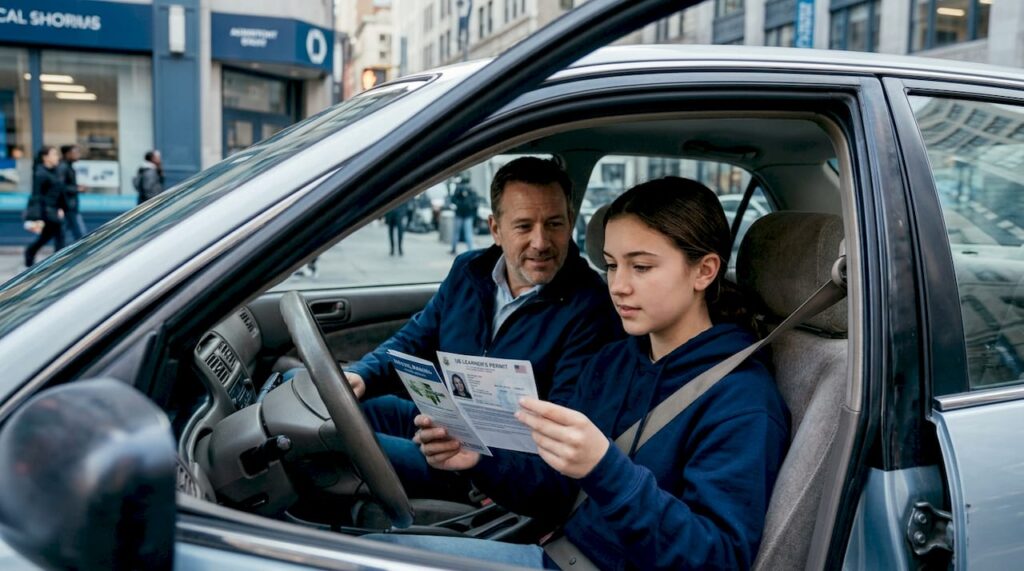
Teaching your teen to drive is one of the most nerve-wracking milestones you’ll face as a parent. You want them to be confident behind the wheel, but you also know the stakes are real. Knowing how to teach teens to drive effectively means more than just narrating left turns. It means building habits, managing emotions, and creating a structured learning experience that sticks long after they get their license. This guide gives you a practical, step-by-step roadmap to do exactly that.
Table of Contents
- Key takeaways
- How to teach teens to drive: getting the foundation right
- Teaching driving skills step by step
- Handling challenges during teen driver training
- Keeping your teen safe after they get licensed
- My honest take after years of working with teen drivers
- Ready to take the next step with Forwardschool?
- FAQ
Key takeaways
| Point | Details |
|---|---|
| Start with legal prep | Secure a learner’s permit and understand your state’s supervised hour requirements before the first lesson. |
| Build skills gradually | Begin in empty parking lots, then progress to quiet streets before tackling busy intersections or highways. |
| Use a written agreement | A parent-teen driving agreement sets clear rules, consequences, and expectations from the start. |
| Expect and plan for challenges | Teen anxiety and risky behavior are normal. Knowing how to respond keeps practice sessions productive. |
| Stay involved after licensure | Periodic supervised drives and enforced restrictions significantly reduce crash risk after licensing. |
How to teach teens to drive: getting the foundation right
Before your teen ever touches the steering wheel, you need to handle a few non-negotiables. Skipping this setup phase is the most common mistake parents make, and it almost always creates bigger problems down the road.
Legal requirements and supervised hours
Most U.S. states require roughly 50 hours of supervised driving before a teen can test for a full license, including a specific number of nighttime hours. The problem is that about half of teens never complete those hours. That gap directly affects safety. In California specifically, understanding the state permit requirements for teens is your first move, since the rules around supervised practice are strict and matter for the DMV test.
Here is what to sort out before lesson one:
- Confirm your teen has their learner’s permit
- Check your state’s required supervised hours and log them from the start
- Review your auto insurance policy to verify your teen is covered
- Make sure the practice vehicle is in good mechanical condition with properly inflated tires and functioning mirrors
- Identify two or three low-traffic practice locations in advance
Pro Tip: Keep a driving log in the car from day one. Apps like DriveLog or even a simple notebook work. Courts and insurers sometimes ask for proof of supervised hours, and it builds accountability in your teen too.
Setting up a parent-teen driving agreement
This step gets skipped more than any other, and it is a mistake. A formal driving agreement spells out rules around phone use, passengers, curfews, and consequences for violations. It removes ambiguity and prevents arguments later. Think of it less as a legal document and more as a shared understanding.
| Rule category | What to address |
|---|---|
| Phone use | No texting or handheld calls at any time while driving |
| Passengers | Limit to zero or one peer passenger during early months |
| Curfews | No driving after a set time, especially late at night |
| Speeding | Agree on consequences for any citation or verified speeding |
| Consequences | Temporary license suspension at home for rule violations |
Setting clear family rules around these categories helps teens internalize responsibility before they ever encounter a real-world test of those boundaries.
Teaching driving skills step by step
The biggest mistake parents make when teaching teens to drive is moving too fast through the skill progression. Confidence does not mean competence. Your goal is to build genuine skill before exposing your teen to complex traffic situations.
Here is a proven progression that actually works:
- Start in an empty parking lot. Use this space to cover the basics: accelerating and braking smoothly, steering control, turning, and parking. Do not rush past this phase. Spend two to three sessions here minimum.
- Move to quiet residential streets. Once your teen handles vehicle controls confidently, introduce actual road driving on low-traffic streets. Focus on stopping distances, scanning intersections, and reading signs.
- Introduce light traffic. Progress to streets with moderate traffic during off-peak hours. Teach lane changes, yielding, and merging. This is where hazard awareness becomes the main lesson.
- Practice highway driving. Merging at speed feels very different than what teens expect. Do this during low-traffic times before attempting rush-hour situations.
- Simulate varied conditions. Gradually include rain, nighttime driving, and unfamiliar routes. Parental modeling of safe habits during this phase makes a measurable difference in how teens respond to stress on the road.
- Add complexity. Highway interchanges, parallel parking, and city driving with pedestrians and cyclists round out the experience.
Pro Tip: Keep practice sessions to 30 to 45 minutes. Teen concentration drops sharply after that point, and fatigued practice builds bad habits rather than good ones. Frequent short sessions beat infrequent long ones every time.
Your communication style during sessions matters as much as the route you choose. Use clear, calm, advance directions. Say “turn left at the next light” before the intersection, not at it. Avoid reactive criticism mid-maneuver, as it startles new drivers. Debrief after each session with two or three specific things they did well and one thing to work on next time.

Handling challenges during teen driver training
Even the best-prepared parents hit rough patches when teaching teens to drive. Knowing what to expect makes the difference between a productive session and a blowup that sets progress back by weeks.
Here are the most common challenges and how to address them:
- Teen anxiety. Some teens freeze or overcorrect under pressure. Reduce complexity immediately, return to a parking lot if needed, and reframe errors as learning data rather than failures.
- Overconfidence. A teen who catches on quickly may start taking risks. Speeding among teen drivers is widespread and often emerges from this overconfidence. Address it directly and immediately.
- Distraction. Even without a phone in hand, teens get distracted by passengers, music, or conversation. Keep the car quiet during early lessons and discuss why that matters.
- Parent-teen tension. You are not their driving instructor. You are their parent. That relationship carries emotional weight that can turn a small mistake into a bigger argument. If sessions consistently end in conflict, consider pausing and exploring certified instructor benefits as a neutral alternative.
“The goal during supervised practice isn’t perfection. It’s pattern recognition. You want your teen to start noticing hazards before they become problems, not reacting after.”
Tools like virtual driving assessments from organizations like the Children’s Hospital of Philadelphia (CHOP) offer a 15-minute simulation that identifies specific skill gaps. These tools are genuinely useful for parents who want data rather than guesswork about where their teen stands.
Keeping your teen safe after they get licensed
Passing the driving test does not mean the job is done. In many ways, this is where your role becomes more nuanced, not less important.
Graduated Driver Licensing (GDL) laws in most states include passenger restrictions and nighttime driving limits for a reason. Research consistently shows these provisions reduce teen crash fatalities. Here is how to enforce them at home even when the law gives some flexibility:
- Limit your teen to one peer passenger for at least the first six months after licensing
- Set a firm nighttime driving cutoff, such as 10 p.m. on weekends
- Use a location-sharing app as a low-conflict accountability tool, not a punishment
- Revisit the driving agreement every few months and update it based on your teen’s track record
- Schedule monthly supervised drives even after licensure
That last point is backed by real evidence. Parental presence after licensing correlates directly with safer driving behavior. Teens drive their best when a parent is in the car, and periodic rides keep that standard anchored in their habits. The transition from learner to licensed driver is a process, not a single event.
Talk openly about real-world consequences. Not lectures about statistics, but honest conversations about what a serious accident means for their future, their finances, and their family. Teens respond better to concrete reality than abstract warnings.
My honest take after years of working with teen drivers
I’ve spent a long time working alongside parents and teen drivers, and the pattern I see most often is not what you’d expect. It’s not that teens are reckless. Most of them genuinely want to get this right. The problem is that parents unconsciously rush the process because the permit period is stressful and they want it over.
What I’ve learned is that the permit stage is actually the most valuable driving education window you have. Every hour of supervised practice during this phase is worth more than almost any post-license intervention. Yet most families treat it like a checkbox rather than a real curriculum.
The other thing I’d push back on is the idea that parental teaching and professional instruction are interchangeable. They are not. Parents bring emotional investment, which is powerful but also limiting. A certified instructor sees your teen’s driving without the history of a thousand other conversations layered on top of it. In my experience, the teens who go through both approaches consistently outperform those who do only one.
My strongest piece of advice is this: do not declare victory at the license. Stay in the car with your teen. Ask questions. Keep driving together. The research supports it, and your gut probably does too.
— Andre
Ready to take the next step with Forwardschool?
Teaching your teen yourself is valuable, but pairing your practice sessions with certified professional instruction makes a real difference in outcomes.
At Forwardschool, we’ve been helping San Jose families build confident, safe teen drivers since 2010. Our instructors meet your teen where they are, filling the gaps that parent teaching alone often misses. Our vehicles have dual brake pedals for safety, and we offer flexible scheduling with free pick-up and drop-off. Explore our teen driver education program to see how we complement what you are already doing at home. You can also review behind-the-wheel lesson options and our full pricing at Forwardschool to find the right fit for your family.
FAQ
How many supervised hours do teens need before getting a license?
Most U.S. states require around 50 supervised hours, including nighttime driving hours, before a teen can apply for a full license. Many teens fall short of this requirement, which directly increases their crash risk.
What should I cover in a parent-teen driving agreement?
A solid agreement covers phone use, passenger limits, nighttime curfews, speeding consequences, and what happens if rules are broken. Using a formal agreement template from a trusted source makes this conversation concrete and harder to revisit later.
When should I consider professional driving lessons for my teen?
If parent-teen sessions are consistently tense, your teen has specific skill gaps, or you notice risk-taking behavior, a certified instructor is worth the investment. Professional instruction and parental teaching work best together, not as substitutes for each other.
How do I help a teen who is anxious about driving?
Reduce complexity immediately. Return to a parking lot or quiet street, shorten session length, and focus on what your teen is doing right. Anxiety usually comes from feeling out of control, so putting more familiar situations in front of them rebuilds confidence without pressure.
Are nighttime driving restrictions still necessary after a teen is licensed?
Yes. GDL nighttime restrictions exist because crash rates for teens spike significantly after dark, especially in the first year after licensing. Enforcing these limits at home, even when the law allows flexibility, is one of the highest-impact safety decisions you can make.
Recommended
- Driving lesson policy: A California parent’s guide – https://forwardschool.com
- Teen Driving Lessons San Jose Parents Trust – Forwardschool.com
- Explaining Driver Education Costs: A Parent and Teen Guide – https://forwardschool.com
- Why certified driving instructors matter for San Jose teens – https://forwardschool.com